Banish the Night Hag
The Myth of the Night Hag
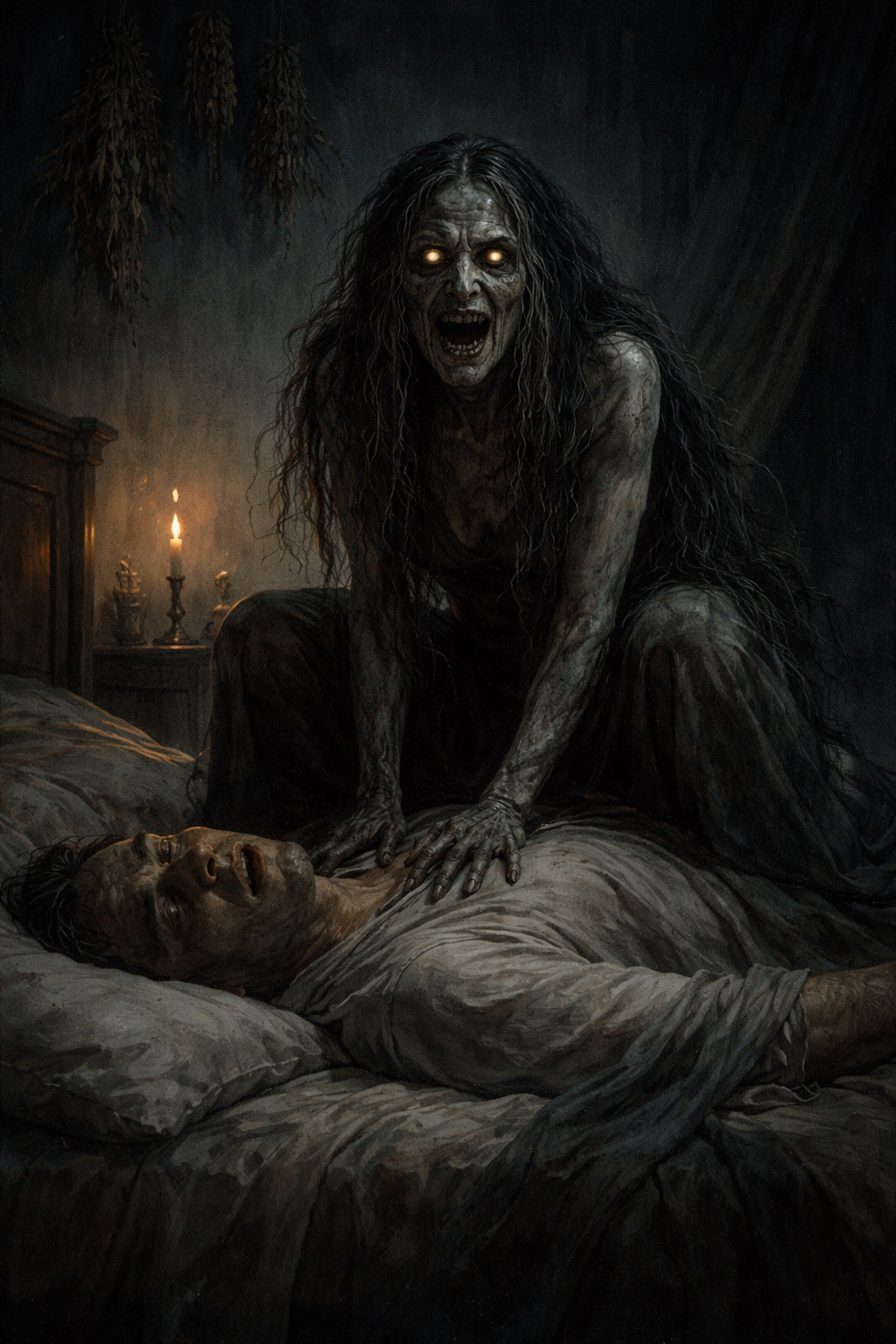
The lore of the Night Hag (sometimes called the "Old Hag") is a truly global phenomenon, appearing in the myths and legends of countless cultures long before modern sleep science existed.
In Scandinavian folklore, she was known as the Mara—a cursed woman or spirit who would ride on the chests of sleeping villagers, bringing horrifying nightmares. In Newfoundland, she is literally called the "Old Hag," and the experience of sleep paralysis is referred to as being "hag-ridden." From the Kanashibari in Japan to the Incubus of medieval Europe, the core of the story remains chillingly consistent: a malevolent entity that assaults the sleeper when they are at their most vulnerable.
Believed to be a witch, a demon, or a restless spirit, the Night Hag was universally feared. But our ancestors did not face the dark passively. They turned to the natural world, relying on the power of plant magic, herbalism, and folklore to cast protective wards over their beds.
The Myth of the Night Hag
The lore of the Night Hag (sometimes called the "Old Hag") is a truly global phenomenon, appearing in the myths and legends of countless cultures long before modern sleep science existed.
In Scandinavian folklore, she was known as the Mara—a cursed woman or spirit who would ride on the chests of sleeping villagers, bringing horrifying nightmares. In Newfoundland, she is literally called the "Old Hag," and the experience of sleep paralysis is referred to as being "hag-ridden." From the Kanashibari in Japan to the Incubus of medieval Europe, the core of the story remains chillingly consistent: a malevolent entity that assaults the sleeper when they are at their most vulnerable.
Believed to be a witch, a demon, or a restless spirit, the Night Hag was universally feared. But our ancestors did not face the dark passively. They turned to the natural world, relying on the power of plant magic, herbalism, and folklore to cast protective wards over their beds.
Botanical Wards: 4 Plants to Protect the Sleeper
In traditional folk magic and herbalism, certain plants were revered for their ability to clear negative energy, bind spirits, and protect the subconscious mind. Here are four of the most powerful botanical allies historically used to keep the Night Hag at bay.
Mugwort (Artemisia vulgaris)
Often called the "Mother of Herbs," Mugwort has a deep connection to the moon, magic, and the dream world. While modern herbalists often use Mugwort to enhance dream recall and encourage lucid dreaming, its ancient purpose was highly protective.
In European folklore, sleeping with a sprig of Mugwort under your pillow was believed to shield the dreamer from psychic attacks, astral entities, and night terrors. It was thought to "filter" the dreamscape, allowing prophetic visions to pass through while trapping the dark, suffocating energy of the Mara.
Folklore Use: Stuffed into "dream pillows" or hung as a dried bundle at the head of the bed to guard the mind during sleep.
St. John’s Wort (Hypericum perforatum)
If the Night Hag represents the creeping darkness, St. John's Wort represents the blazing, protective light of the sun. Boasting bright, star-like yellow flowers that bloom around the Summer Solstice, this herb was considered one of the most powerful sacred protectants in the ancient world.
In ancient Greece and through the medieval period, St. John's Wort was literally referred to as Fuga Daemonum ("Scare Devil" or "Chase-devil"). It was believed that negative entities, witches, and night hags could not bear the solar energy radiating from this plant.
Folklore Use: Gathered on Midsummer's Eve, bundles of St. John's Wort were hung over bedroom doorways and windows to physically bar dark spirits from entering the room.
Lavender (Lavandula angustifolia)
While we commonly associate Lavender with relaxation and spa treatments today, its historic uses run much deeper. Lavender is the ultimate botanical peacemaker. It possesses a uniquely high vibrational energy that demands serenity.
In the context of the Night Hag, Lavender was used not to aggressively fight off spirits, but to create an environment where they simply could not exist. The lore suggests that malevolent entities feed on fear, anxiety, and chaotic energy. The heavy, sweet, and profoundly calming scent of Lavender dissolves fear and grounds the sleeper, essentially starving the nightmare of its fuel.
Folklore Use: Scattered across bed linens, woven into headboards, or burned lightly as incense before sleep to cleanse the room of lingering negativity.
Rowan (Sorbus aucuparia)
When it came to warding off witchcraft and dark magic in Celtic and British folklore, the Rowan tree was unparalleled. Also known as "Mountain Ash," the Rowan bears striking red berries that feature a tiny, naturally occurring pentagram on the bottom—a universally recognized symbol of protection.
Rowan wood was considered so powerful that it was used to carve protective amulets, walking sticks, and crosses to bind evil magic. It was heavily relied upon to stop the Night Hag from "riding" the sleeper.
Folklore Use: Small crosses made of Rowan twigs tied with red thread were slipped beneath the mattress or hung directly over the bed to break the paralyzing grip of the Old Hag.
Crafting a Protective Sleep Sachet
Whether you occasionally suffer from sleep paralysis, struggle with night terrors, or simply wish to honor the old ways, creating a protective sleep sachet is a beautiful way to bring this folklore to life.
What you need:
A small cloth bag (preferably black, purple, or white)
1 part dried Mugwort
1 part dried St. John's Wort
1 part dried Lavender buds
A small piece of Rowan wood or a few dried Rowan berries
Optional: A pinch of sea salt for grounding
The Ritual: Blend the dried herbs together in a small bowl, focusing your intentions on peace, safety, and deep, restorative sleep. Place the mixture into your cloth bag alongside the Rowan and the salt. Tie it securely. Keep this sachet tucked inside your pillowcase or hung on your bedpost to create a botanical shield against the dark.