Tussie-Mussie
In the buttoned-up world of the Victorian era, where emotions were strictly governed and direct speech often forbidden, lovers found a covert way to communicate: they said it with flowers. Known as Floriography, or the Language of Flowers, this intricate code turned every bouquet into a message.
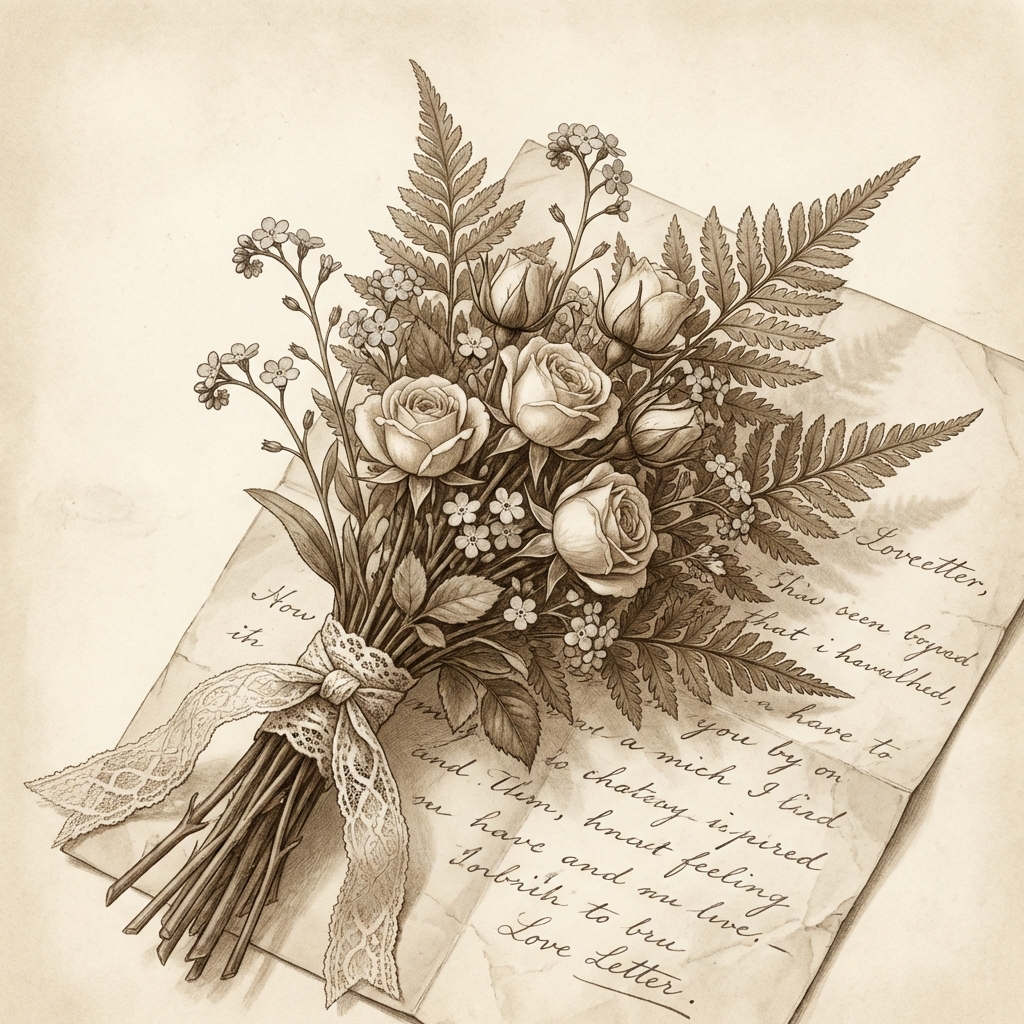
The Talking Bouquet
A "tussie-mussie" was a small, circular nosegay of flowers and herbs, tightly wrapped in a doily. But it was far more than a pretty accessory. If a gentleman sent a lady a bouquet of red roses, he declared his love. If she sent back a yellow carnation, she offered only rejection (disdain). If she sent purple lilac, she whispered that he was her first love.
A Dictionary of Meanings
- Rosemary: Remembrance. "I will never forget you."
- Pansy: Think of me.
- Forget-me-not: True love and memories.
- Lavender: Devotion and silence.
- Basil: Hate (a surprising twist for a kitchen herb!).
- Thyme: Courage and strength.
Reviving the Tradition
Today, our gifts of flowers are often beautiful but silent. Reviving the art of the tussie-mussie brings depth back to the gesture. A bundle of Rosemary and Mint given to a student before an exam (Remembrance and Virtue) is far more meaningful than a generic card. In the garden, we can plant "sentences" that bloom into stories.