The Green Man
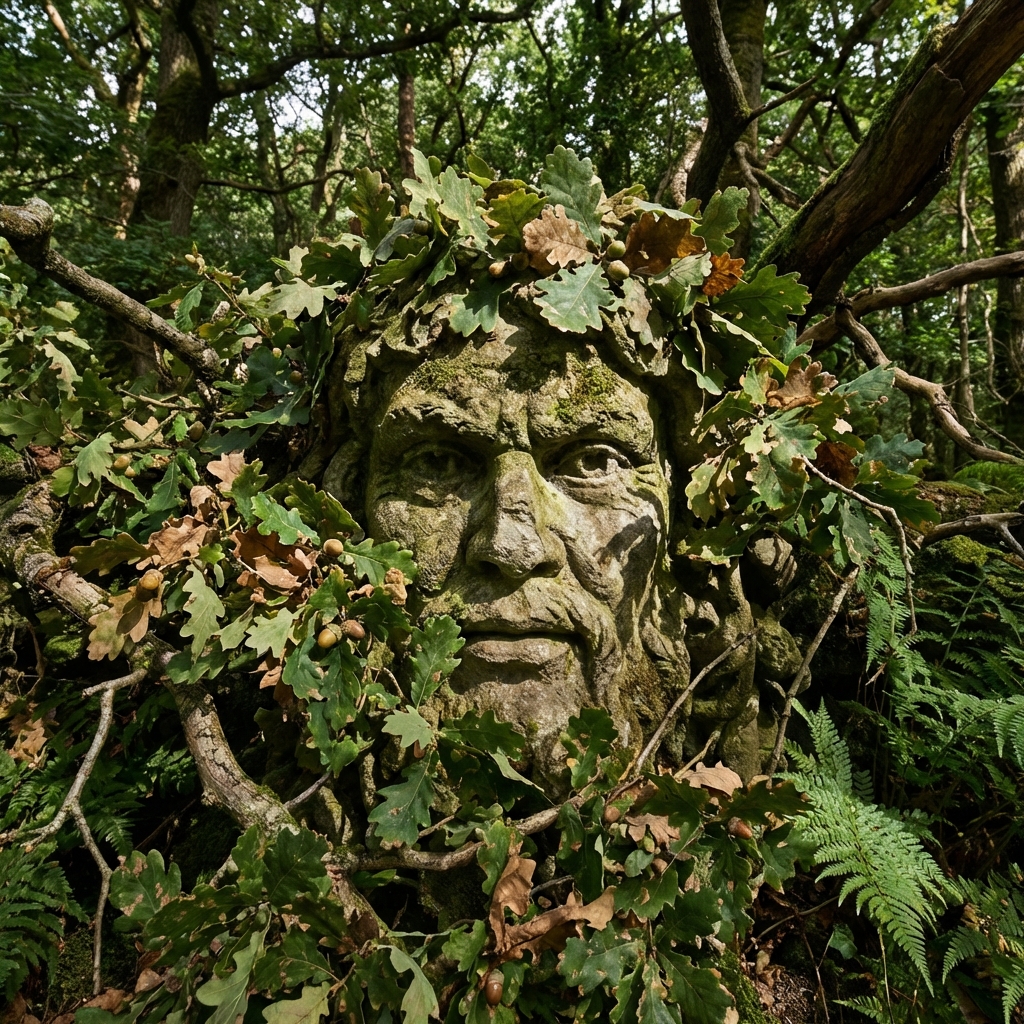
Walk into almost any medieval church in Europe, look up into the high arches, and you will likely see him staring back at you: a face made of leaves, with vines sprouting from his mouth, nose, and eyes. He is the Green Man. Silent, watching, and wildly alive. He is a pagan symbol that refused to be forgotten, seamlessly weaving himself into the stone of the new religion.
A symbol of Renewal
The Green Man represents the irrepressible life force of nature. He is the cycle of death and rebirth, the spring that follows every winter. In herbalism, he embodies the consciousness of the plant world—the idea that nature is not just a resource to be used, but a living being to be communed with.
The Oak King
Often depicted with oak leaves (the most sacred tree of the Druids), he is linked to the concept of the Oak King, the ruler of the waxing year (Spring and Summer). He represents fertility, wildness, and the raw, masculine energy of the forest. He reminds us that we are not separate from nature; we are entangled with it.
Finding Him Today
While we may not carve his face into stone anymore, the spirit of the Green Man is found whenever we step into the woods and feel that sudden, hushed sense of being watched—not with malice, but with a deep, ancient recognition. He is the reminder that the earth is listening.