Moon Gardening
Just as the moon's gravity pulls the ocean tides, gardeners have long believed it affects the moisture in the soil and the sap within plants. Gardening by the moon is not new-age mysticism; it is perhaps the oldest agricultural calendar in existence, followed by farmers long before the almanac was printed.
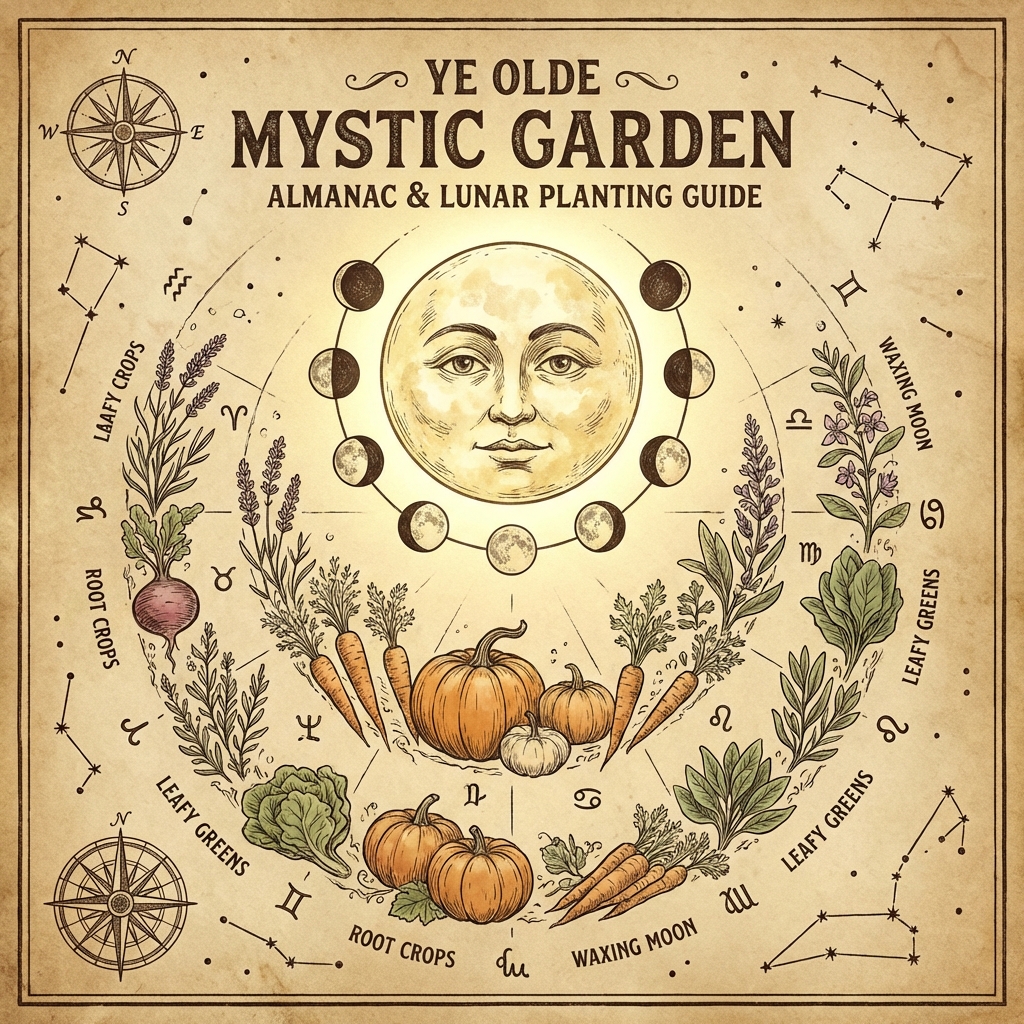
The Basic Rules
The practice divides the lunar cycle into four quarters:
1. New Moon (Waxing Crescent)
Energy: Moisture is rising. Light is increasing.
Plant: Above-ground crops deeply rooted in the earth (Lettuce, Spinach, Celery, Broccoli).
The increasing light encourages leaf growth.
2. First Quarter (Waxing Gibbous)
Energy: Gravitational pull is less, but light is strong.
Plant: Crops that produce seeds inside the fruit (Beans, Melons, Squash, Tomatoes).
3. Full Moon (Waning Gibbous)
Energy: Light begins to decrease, but moisture is high in the soil. Energy shifts downwards.
Plant: Root crops! Carrots, Potatoes, Onions, Beets. It is also the best time to transplant
or prune.
4. Last Quarter (Waning Crescent)
Energy: Gravity and light are low. It is a time of rest.
Do Not Plant: Instead, focus on weeding, harvesting, and turning the soil.