Anti-Inflammatory Plants
A quick reference guide to 8 powerful plants that cool the body and reduce inflammation.
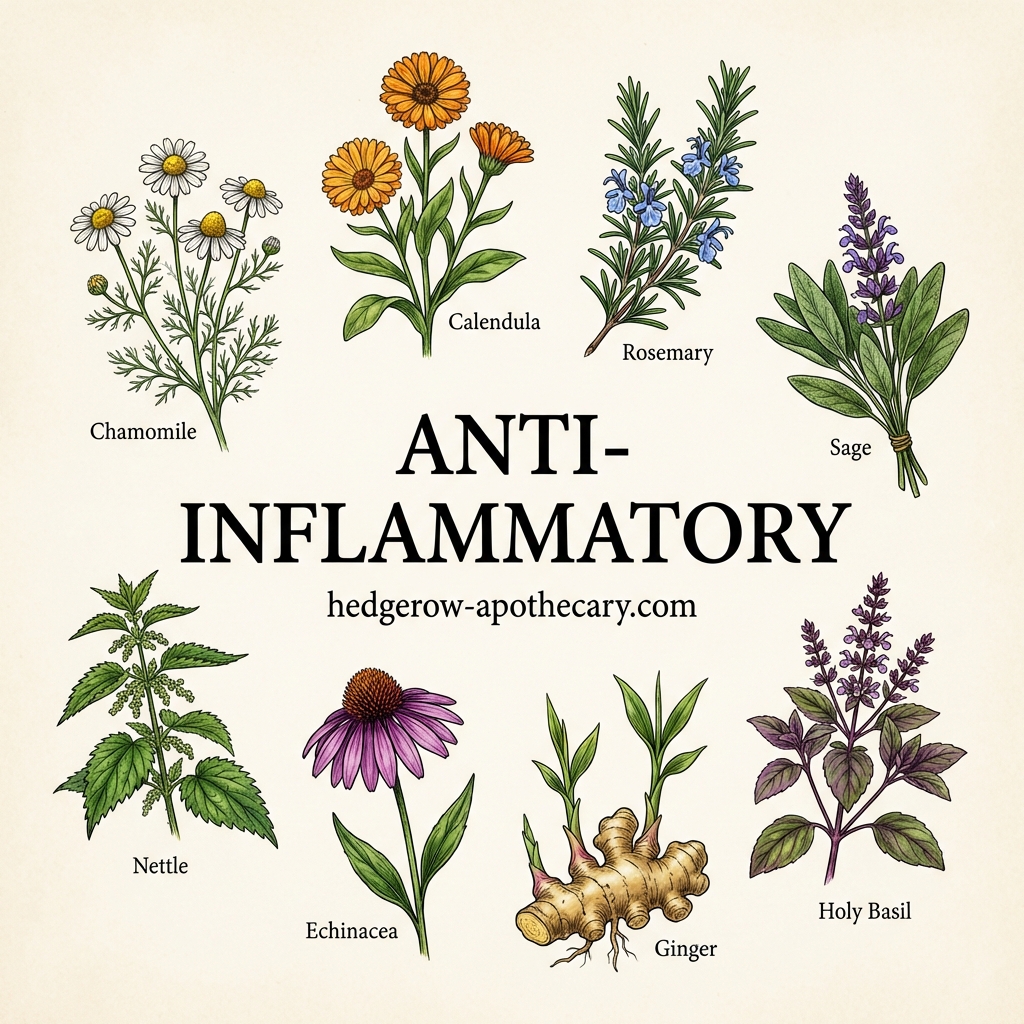
Botanical Breakdown
-
ChamomileWhat it does: Famous for calming red, irritated skin and soothing digestive inflammation.How it's used: Drink as a gentle tea for stomach relief or apply cool tea/infused oil topically to soothe rashes and eczema.
-
CalendulaWhat it does: A powerhouse for skin repair that reduces inflammation and speeds up healing of wounds and burns.How it's used: Most often infused into oils, salves, and creams for dry, itchy skin, or drunk as a tea for internal soothing.
-
RosemaryWhat it does: Contains antioxidants like carnosic acid that help reduce inflammation in muscles and improve circulation.How it's used: Use the essential oil diluted for massage on sore muscles, or brew the fresh needles for a focus-boosting tea.
-
SageWhat it does: Highly antiseptic and anti-inflammatory, making it excellent for soothing sore throats and inflamed gums.How it's used: Gargle with a strong warm tea for throat pain, or drink it to support digestion and reduce excessive sweating.
-
Holy Basil (Tulsi)What it does: An adaptogen that helps the body tackle stress and fights inflammation at a cellular level.How it's used: Best enjoyed daily as a restorative tea to boost immunity and calm the mind.
-
GingerWhat it does: Contains gingerols which actively block inflammatory pathways, fantastic for joint pain and gut health.How it's used: Simmer fresh slices for a warming tea, grate into meals, or take as a capsule for nausea and arthritis relief.
-
EchinaceaWhat it does: Stimulates the immune system and reduces systemic inflammation to help fight off infections.How it's used: Take as a tincture or tea at the very first sign of a cold or flu to speed up recovery.
-
NettleWhat it does: A natural antihistamine that reduces inflammation in the body, helping with hay fever and stiff joints.How it's used: Drink as a daily nourishing infusion (tea) or cook the fresh leaves like spinach for a nutrient-dense meal.